Jules Verne Bot & the Writing Machine
Three character-level models trained on the Extraordinary Journeys — a recurrent network and two Transformers — writing side by side, in your browser.
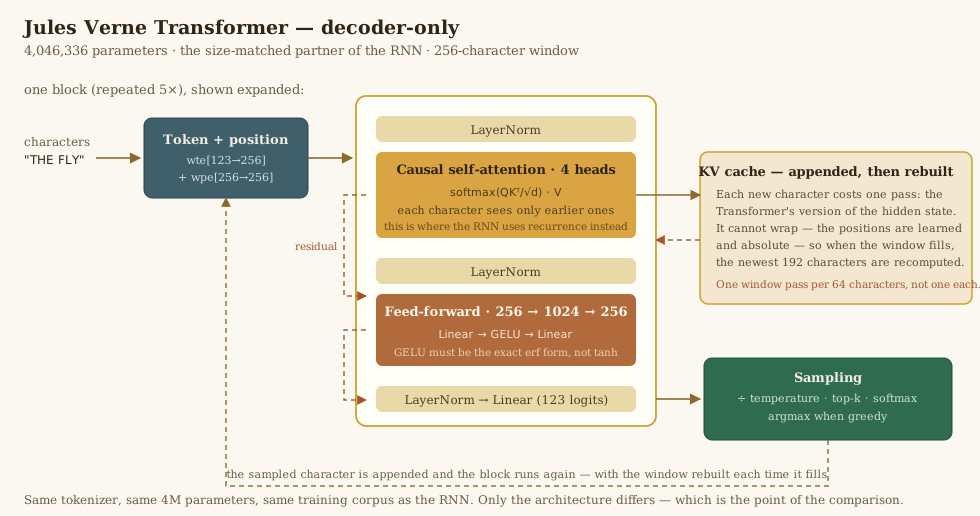
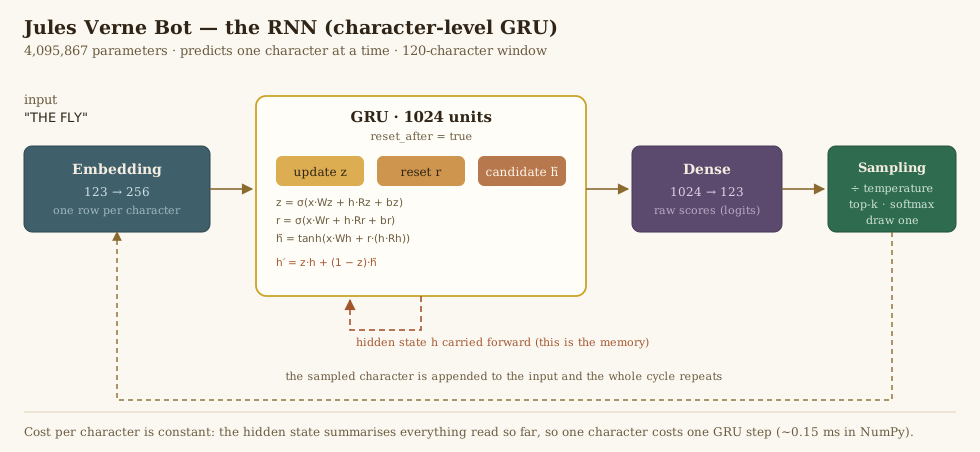
RNN · 4.10M · ctx 120
Transformer · 4.04M · ctx 120
Transformer · 4.05M · ctx 256
123-character vocabulary
no server · no framework
The Controls
RNN weights0%
Transformer weights · ctx 256waiting
Transformer weights · ctx 120on demand
The RNN loads first so the page is usable immediately, then the 256-character Transformer downloads in the background. Each model is about 8 MB of 16-bit weights, so the third — the Transformer that matches the RNN's own 120-character window — is fetched only when you ask for it.
Press Enter to generate. The model writes one character at a time, so it continues your text rather than answering it.
0.70
0.1 cautious1.0 adventurous1.6 wild
Divides the logits before sampling. Low values pick the safest next character; high values flatten the distribution and invite chaos.
400 chars
The novels are hard-wrapped and the models reproduce those line breaks mid-sentence. Switch this off to see the raw character stream.
Reproducible within the page. The browser uses its own generator, so a seed does not reproduce the notebook's exact characters.
From the Machine
Loading the RNN weights…
Side by Side
The same seed, temperature and sampler through each model. The first two have the same size and the same 120-character window, so what separates them is only recurrence against attention; the third adds a longer window on top. Running all three fetches the 120-character Transformer if it is not loaded yet.
Not yet run.
Not yet run.
Not yet run.
What the Three Models Are
Measured
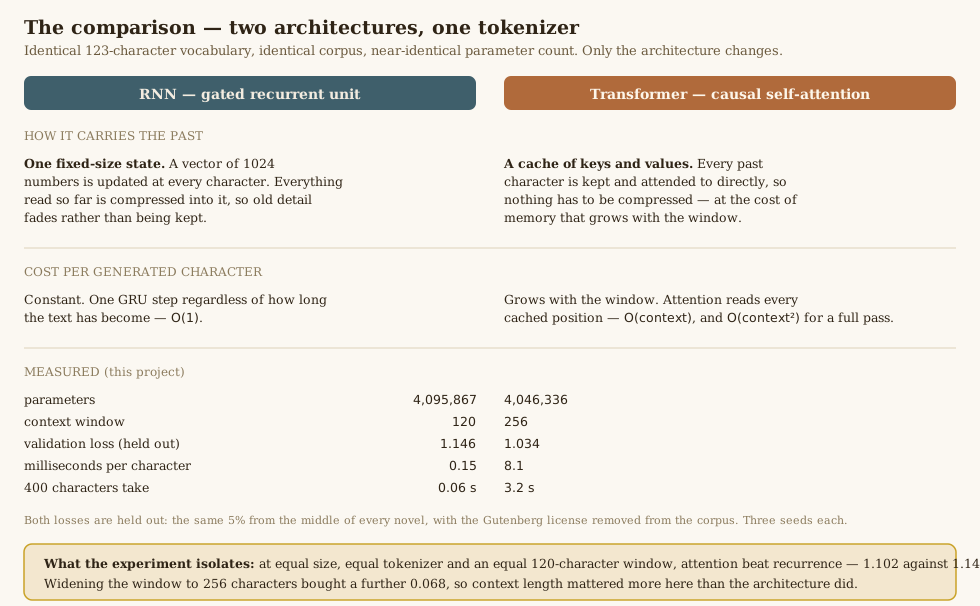
| Run | Parameters | Context | Val loss | ms / char |
|---|---|---|---|---|
| RNN · GRU 1024 | 4,095,867 | 120 | 1.146 | 0.15 |
| Transformer · ctx 120 | 4,011,520 | 120 | 1.102 | 5.8 |
| Transformer · ctx 256 | 4,046,336 | 256 | 1.034 | 8.1 |
All three models are trained on the same ten novels, with the Project Gutenberg license stripped out, and measured on the same held-out 5% of every book. At equal size and an equal 120-character window, attention beats recurrence by 0.044 nats per character — small, but about 22 times the seed-to-seed variation over three seeds each. Widening the window to 256 characters buys a further 0.068, so context length matters more here than the architecture change does.